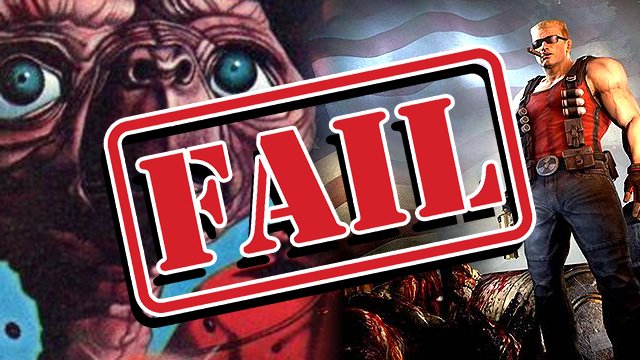
Like its broadcast brethren, gaming has seen its fair share of successes and failures in its half-century of existence. Though some like Call of Duty, Assassin’s Creed, Battlefield, and more have developed to become multi-million dollar franchises, many, many others have faded into obscurity. Be it unrealistic expectations or too much hype, the following is a list of gaming products in the software and hardware space that have become notorious for their failures. In some cases, some of the items in this article have set a precedent for game developers and publishers alike to avoid in posterity.
Gaming’s Biggest Commercial Failures: E.T. The Extra-Terrestrial
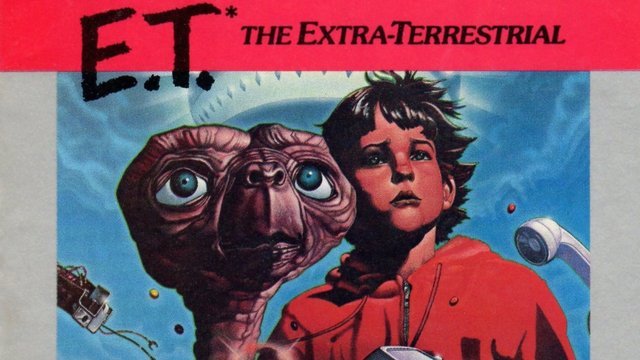
If you grew up in the 1980s, chances are that you’re a fan of Steven Spielberg’s E.T. The Extra-Terrestrial. Publisher Atari sought to catch on to the alien craze of 1982 and secured rights to become the official game developer of the IP, spending around $21 million for licensing. Seeing as how the title was highly anticipated for the holiday season, stores ordered copies of the game in bulk. To their dismay, E.T. become one of the most underwhelming products in the history of the medium both for its failure to meet sales goals and its horrid gameplay design.
Though it’s one of the Atari 2600’s best-selling games, nearly 3 million copies of the E.T. went unsold. Unknowing what to do with all the unused cartridges that caused the company a loss of $536 million, Atari decided to bury many copies in a landfill in New Mexico. This was only excavated in 2014, with many of the unearthed games either auctioned off or given to museums for curation.
Gaming’s Biggest Commercial Failures: Duke Nukem Forever
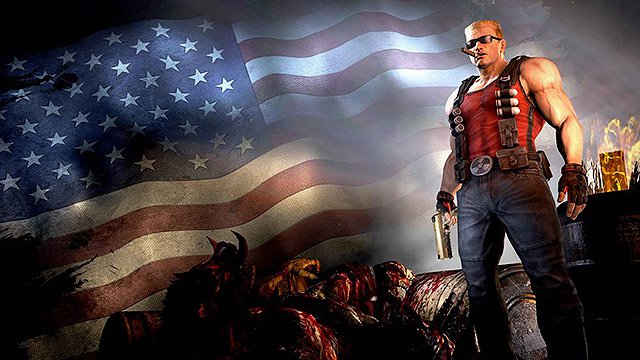
It’s hard to believe that Duke Nukem Forever ever existed. Fans of the franchise waited nearly 15 years for the sequel to Duke Nukem 3D to come out. Needless to say, it didn’t quite live up to the lofty expectations that years of anticipation bring. In fact, it isn’t much of a hyperbole to say that many fans of gaming as a whole just wish it was just cancelled outright.
When it released back in 2011 for PC, Xbox 360, and PS3, critics panned the game for its outdated gameplay mechanics, visuals, and misogynistic protagonist. It seemed as though Duke himself didn’t adapt to the changes of the medium and, as a result, appeared as just an unlikable douche. Though the argument can be made that that’s just what makes Duke the character he is, his persona didn’t match well with the likes of other heroes like Nathan Drake or Geralt. Sales figures were indicative of this, as Forever only went on to sell roughly half of publisher 2K’s expectations.
Gaming’s Biggest Commercial Failures: Virtual Boy
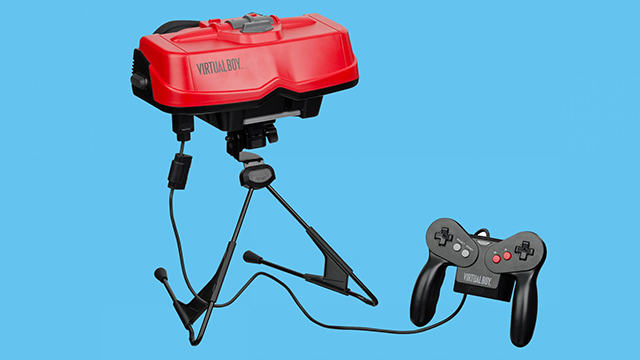
The Virtual Boy is simultaneously one of Nintendo’s most innovative hardware offerings and one of its biggest commercial failures. Built around the concept of playing games in three dimensions (not unlike today’s virtual reality devices), the Virtual Boy was meant to be one of Nintendo’s bold new steps in providing even more innovative experiences to its loyal consumer base.
The manufacturer hoped that fans would overlook a lot of the hardware’s flaws, like its inability to be truly portable, the requirement of a tabletop to play, its lack of true 3D, and its poor, black and red color schemes. Unfortunately, audiences found the idea unappealing, especially with the company warning that the device could cause nausea and headaches. The Virtual Boy went on to sell well below its sales expectations, forcing Nintendo to kill the product in less than two years.
Gaming’s Biggest Commercial Failures: Ouya
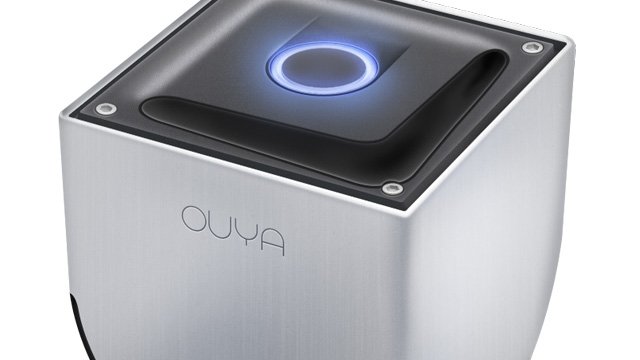
According to its manufacturers, Ouya was meant to become a “revolution” in the gaming space. Though the concept raised over $9 million in its Kickstarter campaign, Ouya hardly set the world on fire when it shipped to backers in March 2013. The product sought to democratize the industry by allowing anyone to create and sell games on a platform that can be enjoyed right in the consumer’s living room TV. The people behind the system were smart to entice potential fans with exclusive offerings in the form of Broken Age and TowerFall, and sold the system at a very reasonable $100 price point.
The tactics didn’t translate well into sales, however, as TowerFall‘s developer went on the record to say that his title only sold 7,000 copies on the console. Critics didn’t receive the product well either, as many cited the system’s poor controllers, lackluster interface, and unsophisticated smartphone technology as the Ouya’s main drawbacks. Razer eventually bought out the company and discontinued the hardware in 2015, solidifying its status as one of the industry’s most recent noteworthy commercial failures.
Gaming’s Biggest Commercial Failures: Sega Saturn
The Sega Saturn was an experiment in video game marketing and sales strategy that ultimately cost its parent company a fighting chance in the hardware race. During E3 1995, Sega announced that the console was already on store shelves for $399 in North America, way ahead of its previously planned September release. Minutes later, Sony announced that their upcoming gaming venture, the PlayStation, would be launching in the fall for $299. Though Sega sought to undercut its competition by releasing a couple of months earlier, consumers thought it best to wait for the cheaper option, one that neglected sprite-based graphics in favor of never-before-seen three-dimensional visuals.
The Sega Saturn went on to sell poorly, especially after long-time competitor Nintendo released its answer to the PlayStation — the Nintendo 64 — the following year. The console went on to move only 9.26 million units worldwide, and was discontinued in 1998.
As evidenced above, like with many forms of entertainment, gaming is susceptible to its fair share of hits and misses. With the industry rooted in technology and innovation, it’s no wonder that the occasional stumbles occur. Thankfully, the medium has learned from history and has improved itself to a point where commercial failures aren’t as commonplace as they used to be. Let’s hope this trend continues for time to come.